Prepare for a career in public safety communications
When someone calls for help, you’re the first point of contact—and the link to the people who can save their life.
In MacEwan’s Emergency Communications and Response certificate program, you train to assess emergencies, make critical decisions and coordinate police, fire and emergency medical services (EMS) in real time. In just eight months, you build the focus, judgement and technical skills needed to work in emergency communications and response.
This full-time certificate accepts applicants each fall. At the end, you participate in a field placement where you put theory into practice in communication centres.
Your path into emergency communications
 |
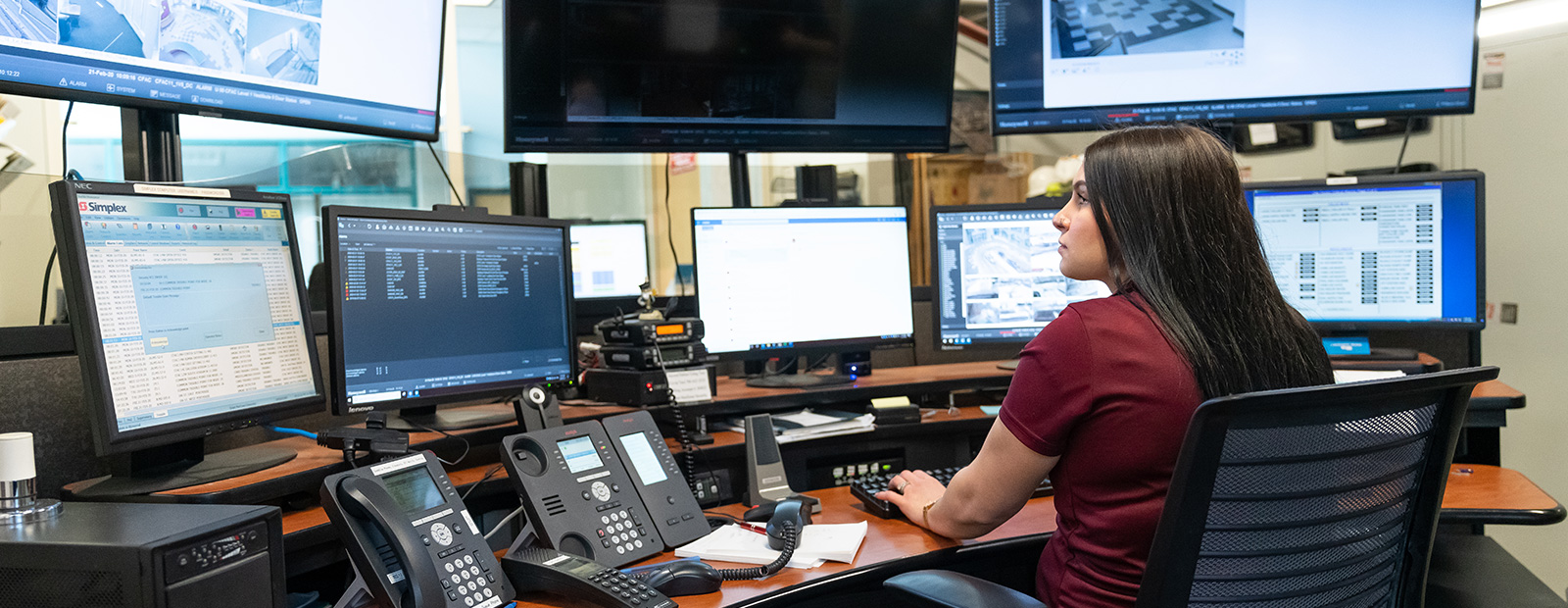
Hands-on trainingTrain in a simulated dispatch environment using industry-standard tools and technology. |
 |
Emergency dispatch careersPrepare for roles in police, fire and emergency medical dispatch and in public safety communication centres. |
 |
High-pressure decision-makingDevelop the ability to assess situations, prioritize calls and make critical decisions in real time. |
 |
Fast-track your careerComplete your certificate in eight months and step quickly into the workforce with in-demand skills. |
Your future
With the demand for skilled dispatchers growing across Canada, you graduate ready for a fast-paced role where your ability to stay calm, think clearly and act quickly directly shapes how emergencies are handled.
In this certificate program, you develop the practical skills needed to work in fast-paced emergency communications environments.
You learn to do the following:
- Assess and prioritize emergency calls in real time.
- Communicate clearly and confidently with people in distress.
- Dispatch and coordinate police, fire and emergency medical services.
- Manage multiple calls, systems and tasks at once.
- Use specialized communication and dispatch technology.
- Make quick, informed decisions under pressure.
You also train in simulated dispatch environments that reflect real-world conditions so that you build the focus and judgement required to support emergency response.
Public safety and justice professionals play a vital role in protecting communities and supporting fair, effective justice systems. Employers value professionals who can communicate with confidence in critical situations.
Graduates of this certificate pursue emergency communication roles in fields such as these:
- 911 dispatch and public safety communication centres
- emergency services and health-care systems
- transit, security and operations centres
- government and industrial organizations
What to expect
Build the core skills needed for emergency communications and response through a focused, hands-on approach. Early in the program, you develop your communication skills, learn how to assess emergency situations and gain confidence using dispatch and communication systems.
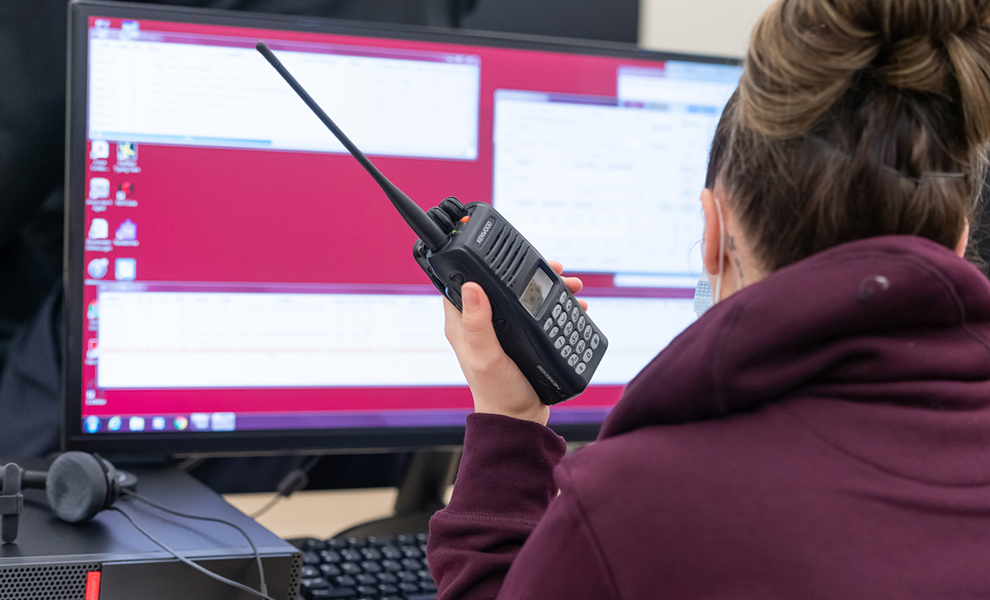
As the program progresses, you work through more complex scenarios, managing multiple calls, prioritizing response and coordinating emergency services in real time. Training in MacEwan’s simulation lab prepares you for the pace and demands of real dispatch environments.
In your final term, you complete a field placement in an emergency communications setting, where you apply your training alongside experienced professionals.

 Explore field placements

Answer the call
Be the vital link in an emergency.