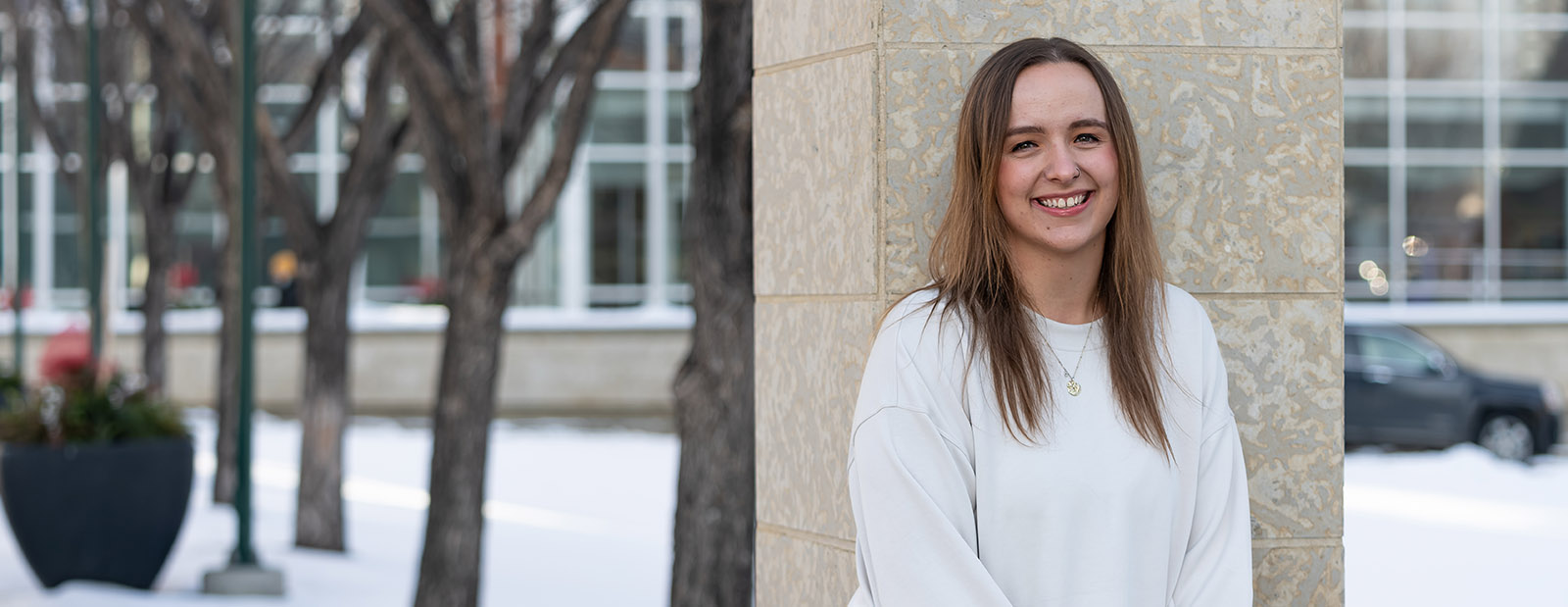
I was 16 years old when I was diagnosed with bone cancer. There was a tumour in my lower left calf and masses on my right lung. After lung surgery and chemo, my left leg was amputated just below the knee.
Everything I do now is based on distance. I know where every elevator is on campus. I know where every seating area is. I know exactly how far it is from each underground parking lot to every place on campus I might need to be. If I have a class in Building 5 and want to go to the gym afterwards, I park at one end of campus, go to class, go back to my car, drive to the other side of campus, park and go to the gym.
I spend a lot of time thinking about logistics. How I’m going to get my groceries. How the weather will affect where I need to go or what I need to do. How I will react when someone without a placard making a quick stop is parked in the stall that I need (which happens a lot more than you might think).
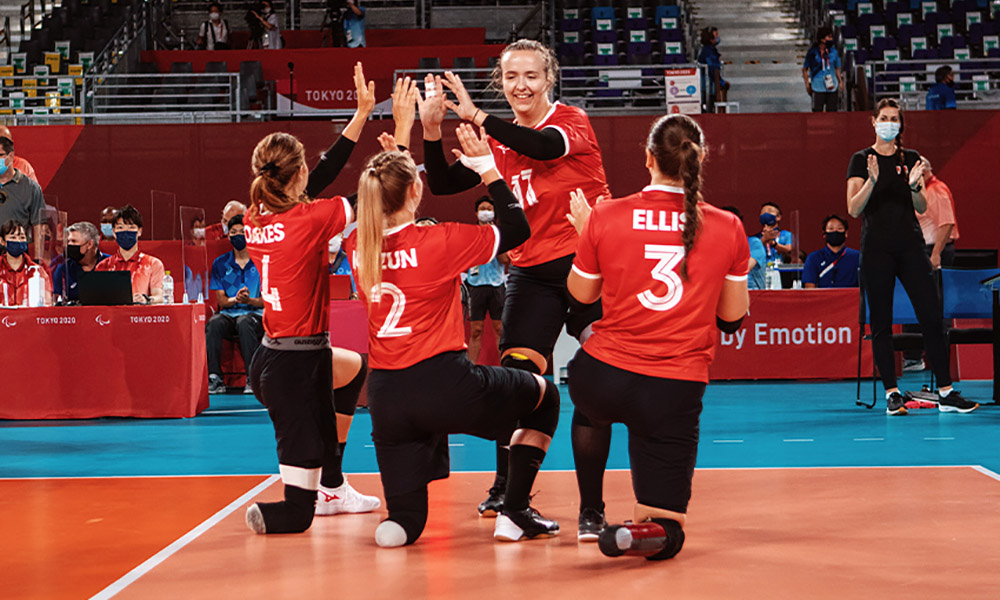
It’s so basic, but it’s important to understand that for the 15 per cent of the population who are disabled, the world can look very different. I was competing at the Tokyo 2020 Paralympic Games when WeThe15 was initiated to campaign for disability, visibility, inclusion and accessibility.
I think that education and awareness are the beginning of making real changes when it comes to inclusion and accessibility – and part of that requires some self-reflection about the privileges that come with being able-bodied. Talking about that makes me a bit emotional. It really is a privilege to be able to walk three blocks without thinking about it. Or to make your way through a turnstile without wondering whether your wheelchair will fit. Or to have snow and ice just be an annoyance and not something that keeps you from being able to walk outside.
My disability is a big deal. It impacts my life. It makes me different. It’s part of who I am. But even though it’s important to me to identify as disabled, I’m also just a person.
Basically, I want people to think about disabled people and not be afraid of that word. You don’t need to overdo it, but you shouldn’t minimize it. Understand that every person’s experience is unique. Be conscious of the language you use and think about your privilege. If you see someone who needs help, offer it. If you notice that a public space or business isn’t accessible, say something.
–Heidi Peters, Bachelor of Arts student (Psychology and Political Science), Griffins women’s volleyball assistant coach and member of the Canadian women’s sitting volleyball team.
 LEARN MORE
 FULL STORY