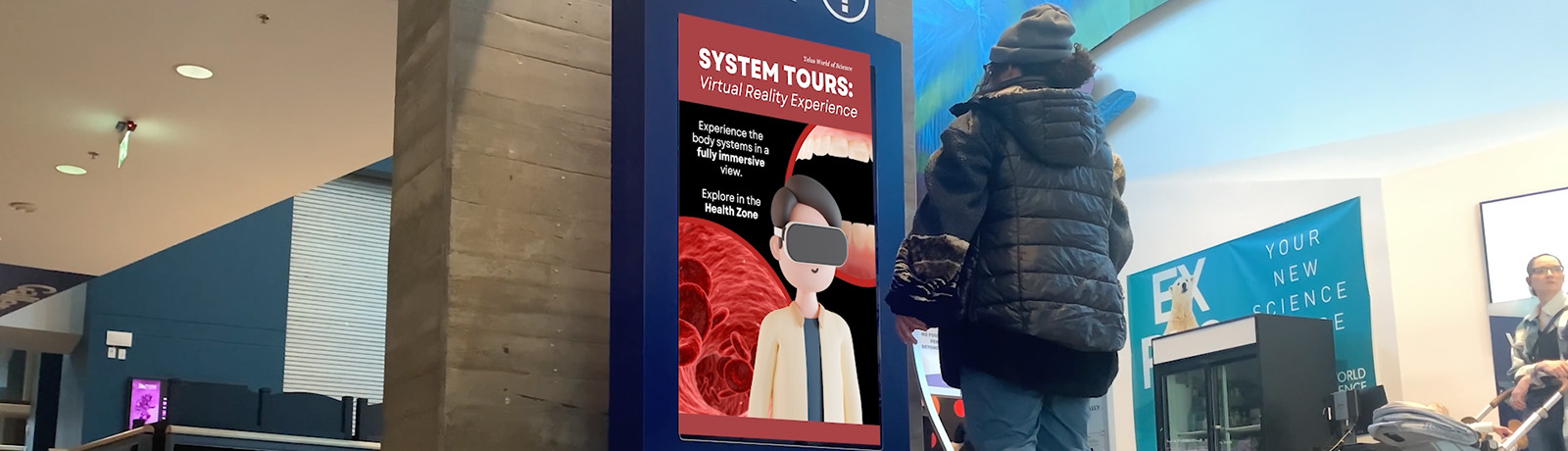
When Priya Thapar and her group members in Dr. Farzan Baradaran Rahimi’s design class were looking for a project with TELUS World of Science – Edmonton, they fell in love with the idea of developing a way to illustrate how the human heart works.
Instead of a traditional model that showed how valves and arteries function, Thapar and her team members, Sarena Philips and Lindsey White, saw potential for a virtual reality (VR) solution.
“With VR, visitors can explore complex biological systems in depth, interact with 3D models and receive guided information – all without physical equipment limitations,” she says.
So they set out to research existing VR platforms and tools that would match the museum’s budget and audience, aiming to create a concept video for a tailored experience that met its educational goals. With guidance from Dr. Rahimi, they developed storyboards and mockups, considered logistical concerns including hygiene and sanitization, looked at accessibility and inclusivity, then refined their designs and ultimately created the concept for a VR game with two levels of difficulty – one for users under age 13 and another for older players.
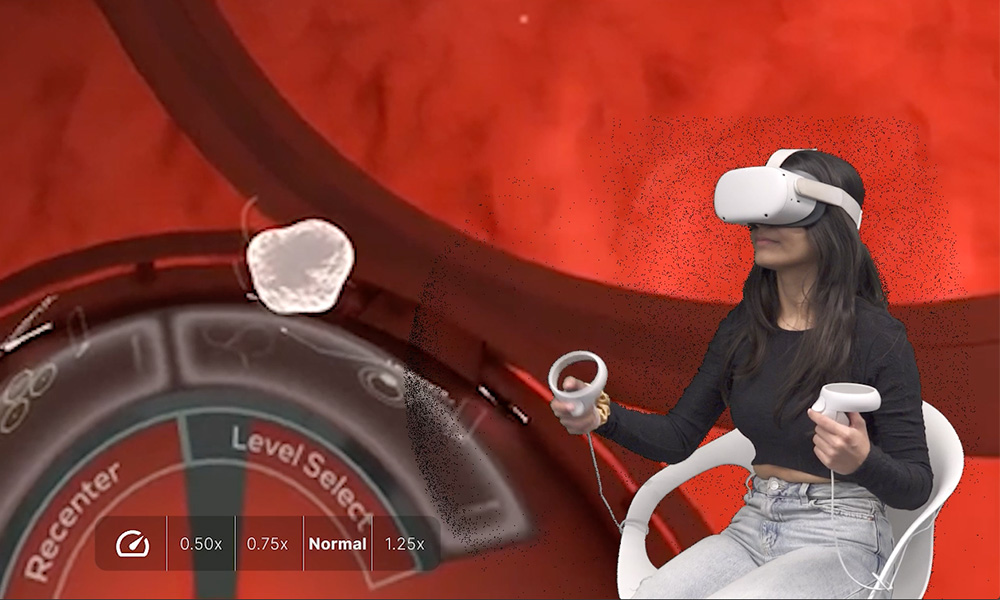
A screenshot from the design video that imagines Priya Thapar in a virtual reality experience that she and her team considered as part of a work-integrated learning experience with the TELUS World of Science – Edmonton.
When they showed a demo video showcasing how the VR game would work in the TELUS World of Science setting, the feedback they got from their client was overwhelmingly positive.
“They appreciated our idea’s creativity, usability and educational potential,” says Thapar. “This project pushed us outside our comfort zones in the best possible way. I now carry a deeper appreciation for user-centred design and the importance of aligning technology with meaningful outcomes.”
 Full story