
Biological Sciences instructors show students how to use visual literacy as a pathway to transforming how they think.
In today’s data-rich scientific world, long, text-heavy publications are becoming less desirable. Journals increasingly require fewer words, instead opting for more visual representations—such as diagrams, models, graphs and other visual tools—to communicate information to the average layperson.
To prepare MacEwan students for that reality, Dr. Nina Bernstein, an Assistant Professor, and Amy Tessier, a Lab Instructor in the Department of Biological Sciences, have shaped their biochemistry course around visual literacy. They say it was a natural fit, given that biochemistry is an inherently visual science that requires understanding what molecules look like.
Dr. Nina Bernstein
Department of Biological Sciences
Bernstein and Tessier see this approach as more than just preparing students for the industry. It’s also a pathway to deeper thinking, giving students the ability to interpret, create and reason through complex concepts using visual representations. The instructors say it supports critical thinking, problem-solving and effective communication—durable skills that support students’ learning and research.
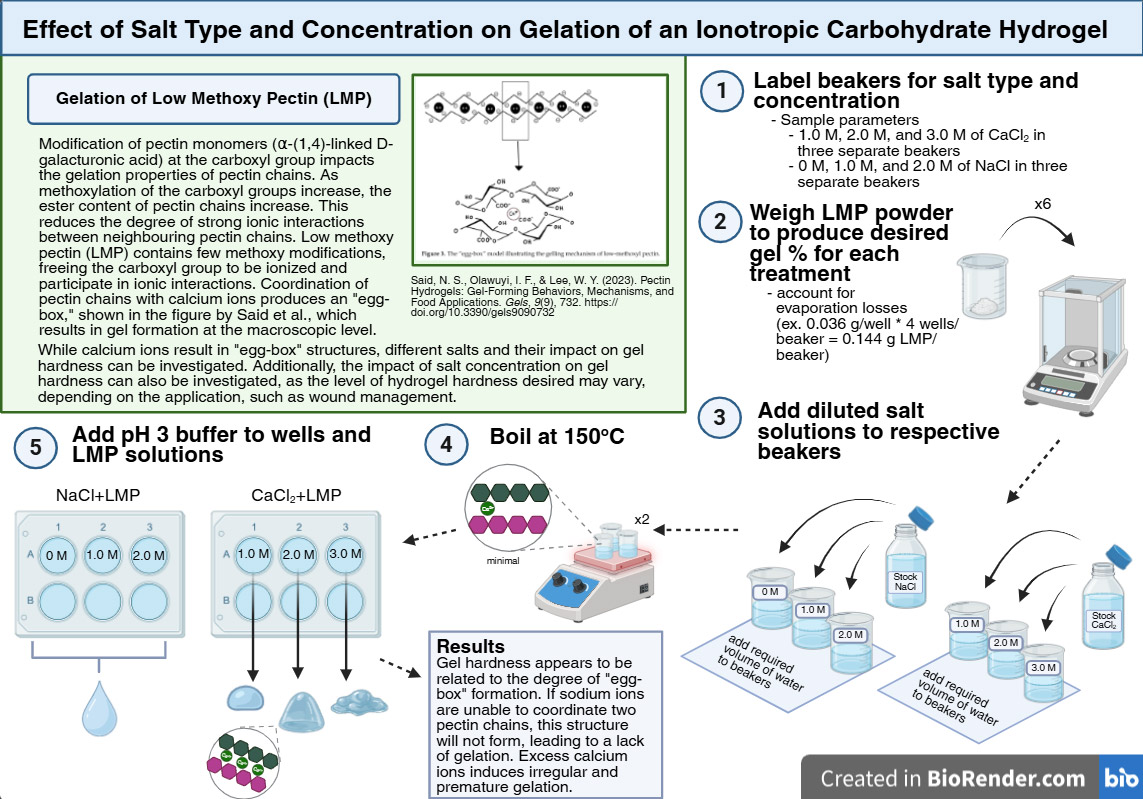
Bernstein has students incorporate ChimeraX for molecular visualization, while Tessier uses BioRender to help them clearly illustrate experimental techniques and core concepts. Students don’t just study visuals; they create their own, using software or hand-drawn sketches to interpret and communicate information.
Students also use the software to prepare for lab work by mapping out procedures step by step in advance. Visualizing each stage supports planning and helps students spot potential problems before they happen.
Newer artificial intelligence features are opening even more possibilities, including tools that can turn photos of lab setups into clean illustrations.
Looking ahead, Tessier and Bernstein plan to continue expanding these approaches, putting more grading weight on software-based projects. They’re also interested in partnering with other Departments, including Design, Computer Science, and more, with the belief that visual communication skills are applicable across disciplines and beyond the classroom.