
From promoting play to putting giant tortoises back where they belong, MacEwan University faculty spend their time beyond the classroom working on research that creates opportunities for students – and often circles right back into the courses they teach.
As the winter term winds down and many turn toward a summer of fieldwork and discovery, we’re looking back at some of the recent, far-reaching, niche, wild and community-engaged projects our faculty have taken on.
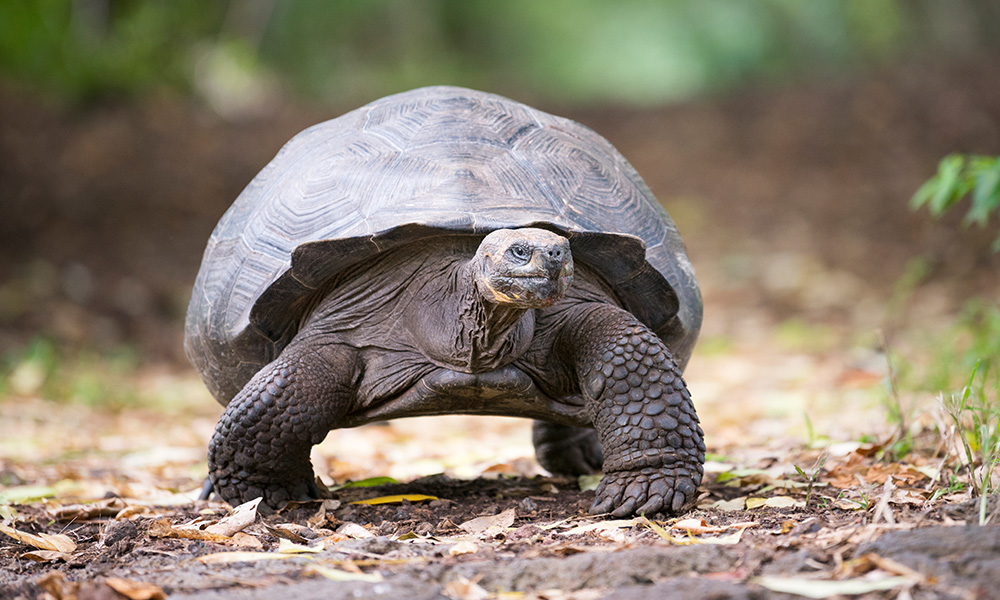
Tortoise take-over
Dr. Joshua Miller was ecstatic to see Galapagos tortoises make their way back to the island of Floreana after being absent for 180 years. Earlier in his career, Dr. Miller helped relocate Floreana tortoises from Isabella Island, where they had been moved over a century earlier by whalers and pirates, an accidental act that ultimately saved the species. Once removed from Isabella, Dr. Miller helped establish genetically based breeding groups, the descendants of which are Floreana’s newest hard-shelled residents. Dr. Miller continues to work on genetic analyses of these tortoises in collaboration with MacEwan student researchers.

The science of play
Play may appear simple, but it is a powerful driver of learning. Earlier this year, Dr. Ozlem Cankaya’s work on loose parts play and how it encourages spontaneous science, technology, engineering and mathematics (STEM) behaviours, was a published in Nature.
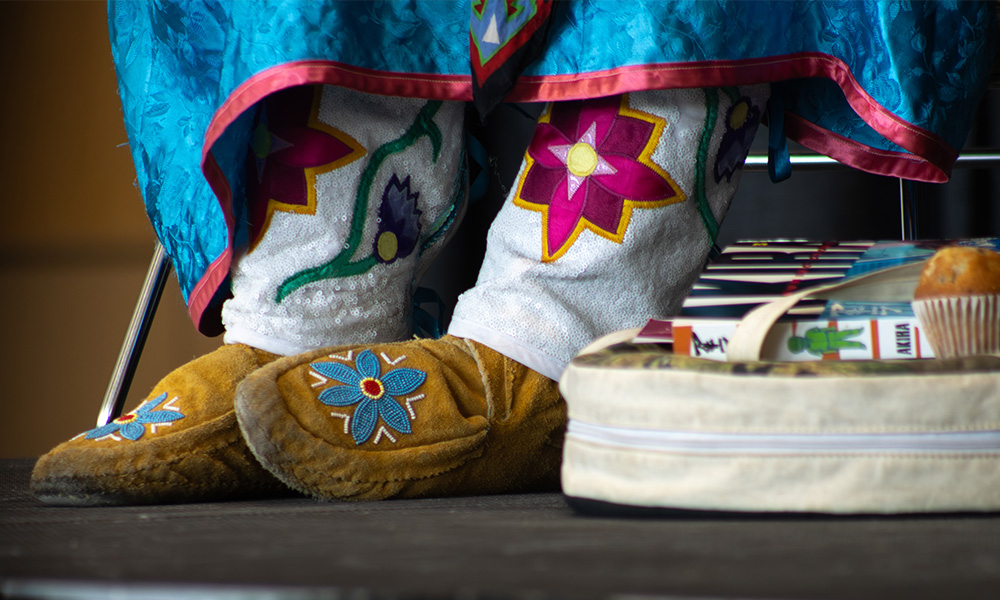 Photo by Amanda Erickson
Finding your Nakota Spirit
How can history, language, culture and ceremony contribute to healing and identity? Finding Your Nakota Spirit, funded by the National Geographic Society and Future Generations Foundation in partnership with MacEwan communications prof Vivian Giang, is a podcast and short film featuring four youth from Alexis Nakota Sioux Nation. By telling their own intergenerational stories, they hope to inspire future generations of Stoney Nakota to heal, reconnect and embark on their own journeys.

Black Friday role models
Case studies are critical to business education, offering in-depth, real-world narratives for students. A recent case study by Dr. Hadi Chapardar and Dr. Albena Pergelova looks at DECIEM, a beauty company that uses an “Anti-Black Friday” approach. Rather than promoting impulse purchasing, they close their stores on Black Friday and dedicate the entire preceding month to an educational campaign encouraging consumers to research and buy thoughtfully.
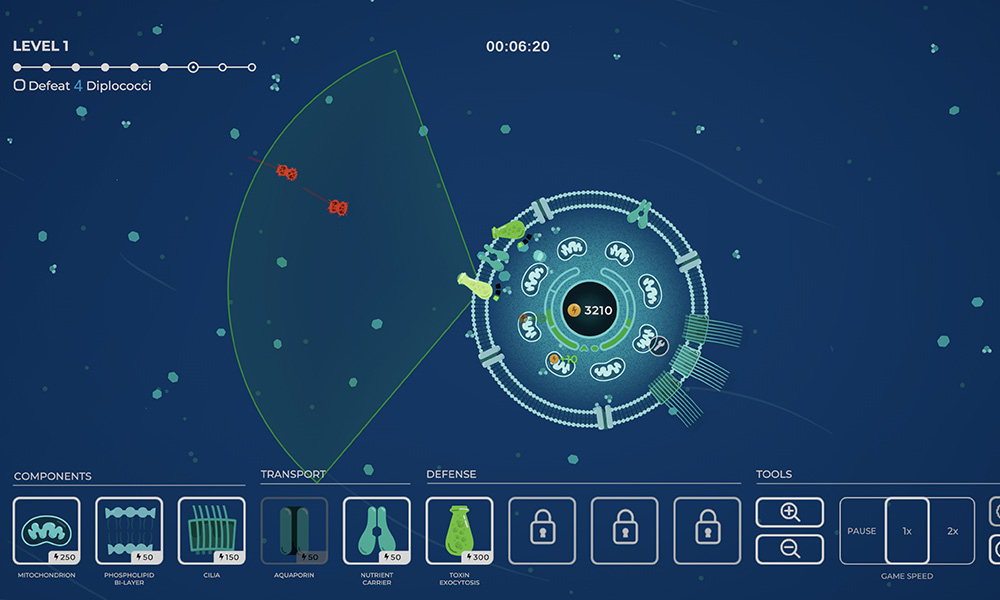
Living on the edge
A MacEwan-developed educational video game on cell biology was back in the books – this time in the journal Heliyon. Dr. Ross Shaw reported on a study conducted in one of the university’s BIOL 101 courses that examined how the game Life on the Edge was used to teach cell biology concepts. The game itself was launched in 2022 as an interdisciplinary effort involving faculty and students from departments and disciplines across the university.

Freeze-drying and food fermentation
Dr. Benjamin Bourrie published a piece in Frontiers in Microbiology showing that freeze-dried starters can successfully recreate the fresh-culture fermented kefir – which is growing in popularity for its purported gut-health benefits. It’s good news on the road to developing commercially viable starter cultures that can recreate traditional fermented foods.
Quick takes
Dr. Daniel Alati, associate professor in the Department of Sociology, is releasing a new book that explores Canada’s use of restorative practice in a comparative context. The book, entitled Alternative Justice and Restorative Practices: Comparative Perspectives, argues that justice systems in Canada and around the world are in crisis and thus in need of substantial reform.
Dr. JJ Wright, assistant professor in the Department of Sociology, published an article on gender-based violence experienced by 2SLGBTQ+ communities in the Journal of Homosexuality.
Sheena Rossiter, assistant professor in the Department of Communications, was editor, co-writer and producer for the documentary feature The Perfect Match, premiering at the NorthWest Film Festival at Metro Cinema on April 11.
Dr. Alba Devo Colis, assistant professor of Spanish, contributed a chapter to Animal Symbolism in Hispanic Literature: From the Sixteenth Century to the Present Day. “Colonizing Monsters and Decolonizing Beasts: The Case of Mariana Enríquez’s Our Share of Night” interprets the novel as an allegory of colonial violence, dictatorship and the dehumanization of racialized bodies, highlighting the consequences of colonial power while opening the possibility of resistance, epistemic awareness and re-existence.
Dr. Marla Epp, associate professor of French in the Department of Humanities, published “Silence and Solitude in the Muséum national d'Histoire naturelle” in Modern Language Review.
Dr. Rohit Jindal’s recent paper in the Journal of Economic Behavior & Organization shows that how people are selected for jobs or contracts can be just as important as how much they are paid. In field experiments, workers chosen through fair processes put in significantly more effort than those selected through lotteries or competitive bidding, suggesting the importance of fair recruitment and contracting procedures, not just financial incentives.
In case you missed it
Research Recast(ed), a podcast from the Office of Research Services, welcomed 16 MacEwan profs during its 2025/26 season. Host Kelsie Johnston spoke with faculty members across the university about everything from technological innovations in agriculture to digital approaches to feminist literature. Check out season five of Research Recast(ed) on Pinecast.
From what “looksmaxxing” says about modern masculinity to the potential for “mini-brains” to replace lab animals and how Trump’s call for an “Independence Arch” links to historical arches, MacEwan faculty members regularly contribute timely insights on current issues for The Conversation.

We regularly sum up the far-reaching, niche, wild and community-engaged projects MacEwan faculty have on the go.
Know of a faculty member project we should include?