Because 75 per cent of people in federal prison don’t have a high school diploma, it makes sense for the system to provide adult basic education – improving literacy, social cognition, problem-solving and employability. But what about those who are ready for more – whose lives could be transformed by post-secondary education?
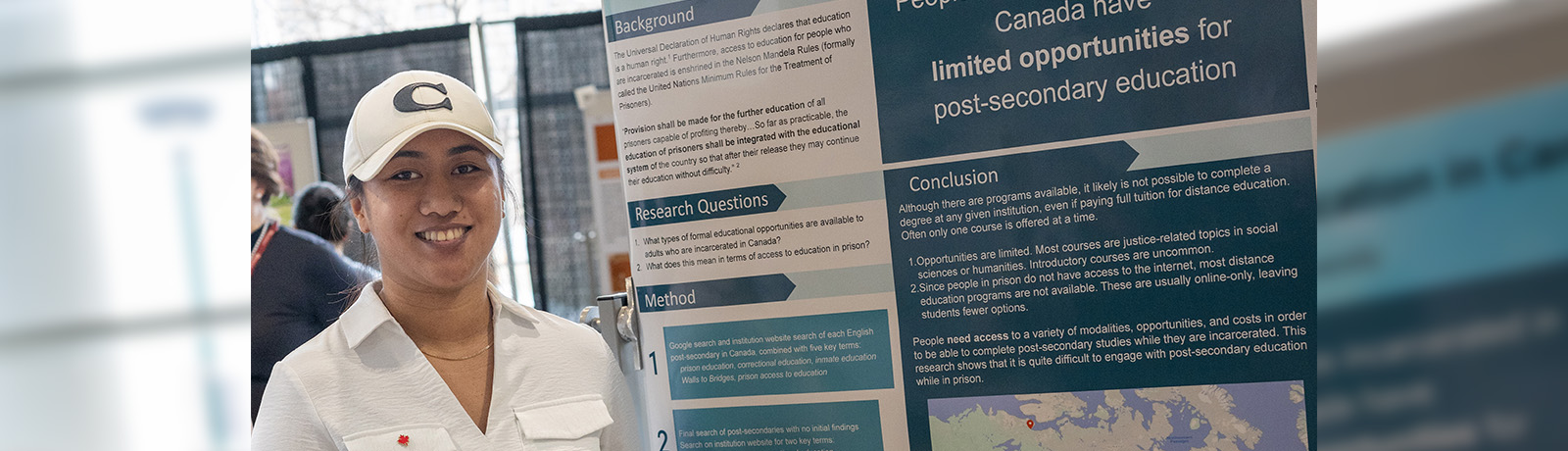
“Nobody really knew what was happening with higher education in prison throughout Canada,” says Nicole Patrie, assistant professor in the Department of Public Safety and Justice Studies. So, with help from MacEwan’s Office of Research Services, she teamed up with research assistant April Abarra to find out.
The second-year Bachelor of Social Work student spent months during the summer of 2025 gathering publicly available data from every publicly funded, English-speaking post-secondary institution in Canada, including community colleges, polytechnics and universities. After an intensive search, she found 20 programs across the country, each usually offering a few courses per semester to incarcerated students.
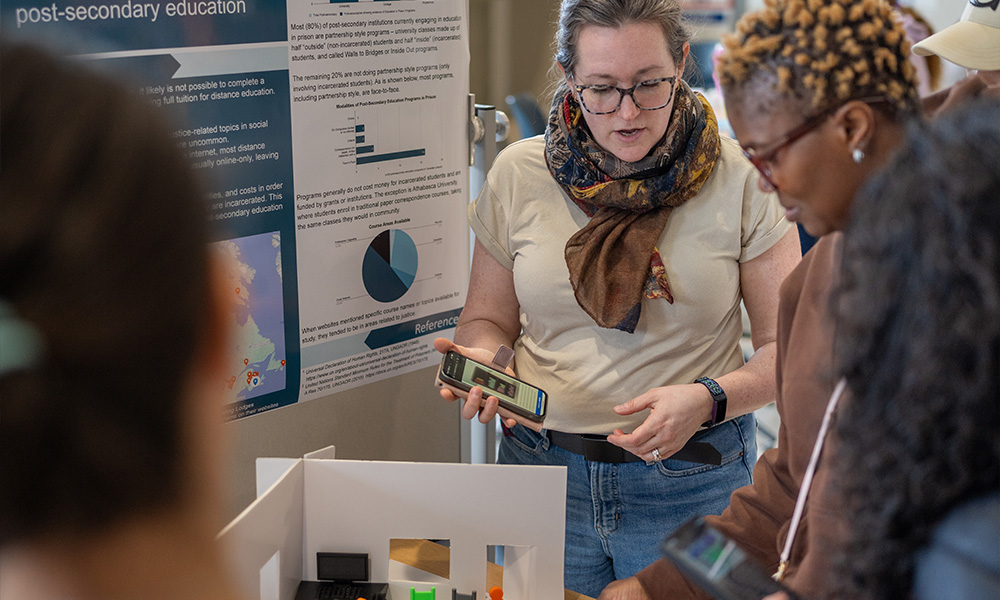
Most commonly (80 per cent of the time), the couress on offer take the form of “partnership-style” programs where half of the students in a class are incarcerated and half are not. All students work together in person, in a prison setting – typically studying justice-related topics in the social sciences (48 per cent of all offerings) or humanities (29 per cent of all offerings).
Subjects like science, fine arts and professional education and upgrading (13 per cent) are offered far less often, if at all, Abarra found.
“Teaching subjects like science or art is difficult inside facilities where you don’t have access to labs and tools,” explains Patrie. “Typically, courses that are easier to deliver are what’s made available. It’s not balanced access.”
The low number of offerings and the lack of breadth in subject matter make it virtually impossible for people who are incarcerated to finish a post-secondary program, she adds. “Most often, people are taking one-off courses and trying to cobble them together.”
Cost is another barrier Abarra identified. “These programs are not for everyone, and sometimes you need to have financial resources to be able to access them,” she says, adding that she hopes her research will lead to advocacy for expanded educational opportunities.
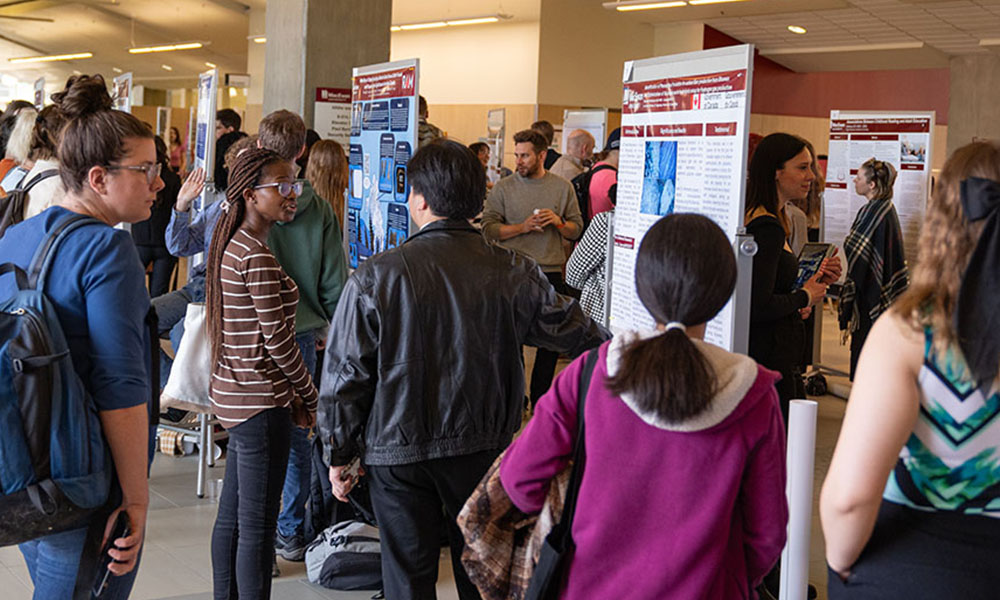
That matters. As Abarra and Patrie outline in the academic poster they shared at Student Research Day and a recent Alberta Correctional Education Association Conference, education is a human right and access to education for people who are incarcerated is enshrined in the Nelson Mandela Rules (the standard minimum rules for the treatment of prisoners).
“I hope that they get opportunities to start a new life,” says Abarra.

This student snapshot story is part of a series that showcases MacEwan students’ passion, experiences and accomplishments – inside and outside the classroom.
Know someone we should feature?
 RESEARCH PRIMER