Whether we’re cuddling up with them on our sofas or admiring them in the wild, humans are, without a doubt, drawn to animals. MacEwan students are taking that interest a step further, seeking a deeper understanding of critters and their behaviours.
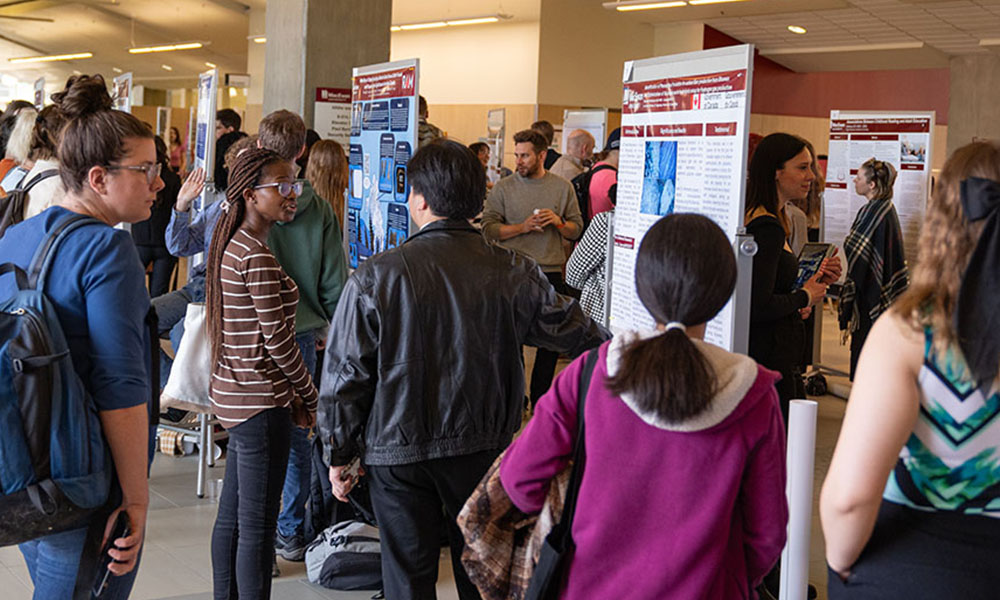
These five students asked big questions about animals – and were among the more than 300 students who presented their hard work at Student Research Day 2026 in April.
 RESEARCH PRIMER
Can worm diets change soil health?
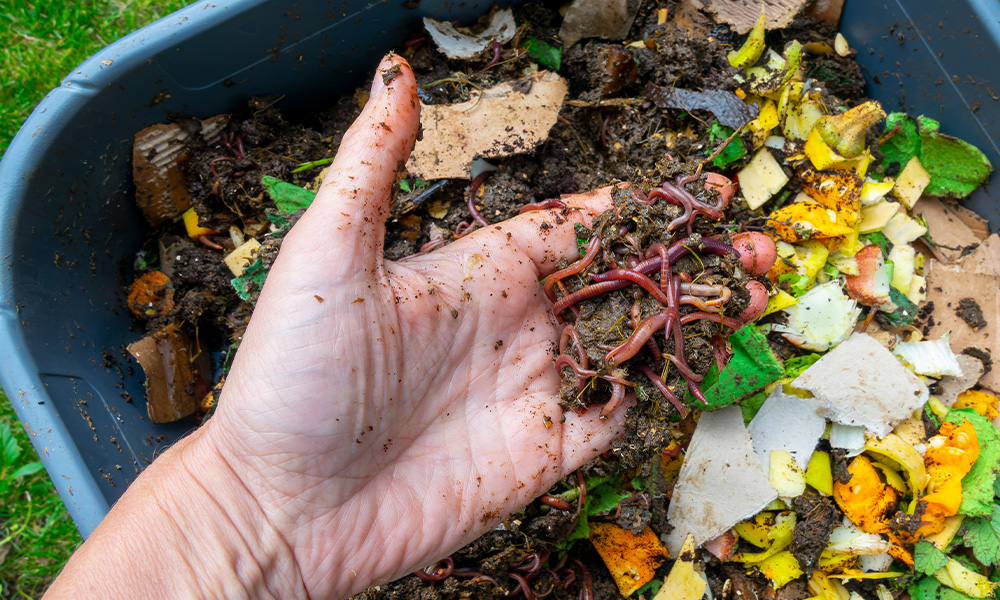
“As a kid, I was fascinated by my grandparents’ compost bin,” says Sydney Benoit. “I remember watching the worms move through the organic waste, seeing these little creatures take materials we were finished with and incorporating them back into the environment.”
The Bachelor of Science student recalled those memories from her childhood in the Yukon when considering agricultural systems here in Alberta. She began researching vermicomposting – using worms to break down organic materials and produce nutrient-rich vermicompost. Benoit worked with Mathieu Chalifour, assistant professor in the Department of Mathematics and Statistics, investigating whether the types of organic materials worms consume can affect the nutrients found in the resulting vermicompost.
She found that different feedstocks – diets and different types of organic waste – produce different nutrient profiles, and that worms eating leaf litter produce potassium-rich soil. Benoit also found that worms that weren’t given any extra organic waste still increased the availability of nutrients in the soil, which suggested that worms may help to transform nutrients already present in soil into more available forms.
The project also produced results for Benoit personally. Her curiosity led her to reach out to companies to learn about their work, and one of those conversations led to her becoming a research and development chemistry technician at Annelida Soil Solutions Ltd., where she still uses worms in her work creating and testing potential new products to reduce reliance on chemical fertilizers.
“Sometimes you don’t know where something is going to lead until you actually start asking questions and making those connections,” she says. “Even a project about worms can start conversations and open doors.”
How do deer pass through the fence at Elk Island?
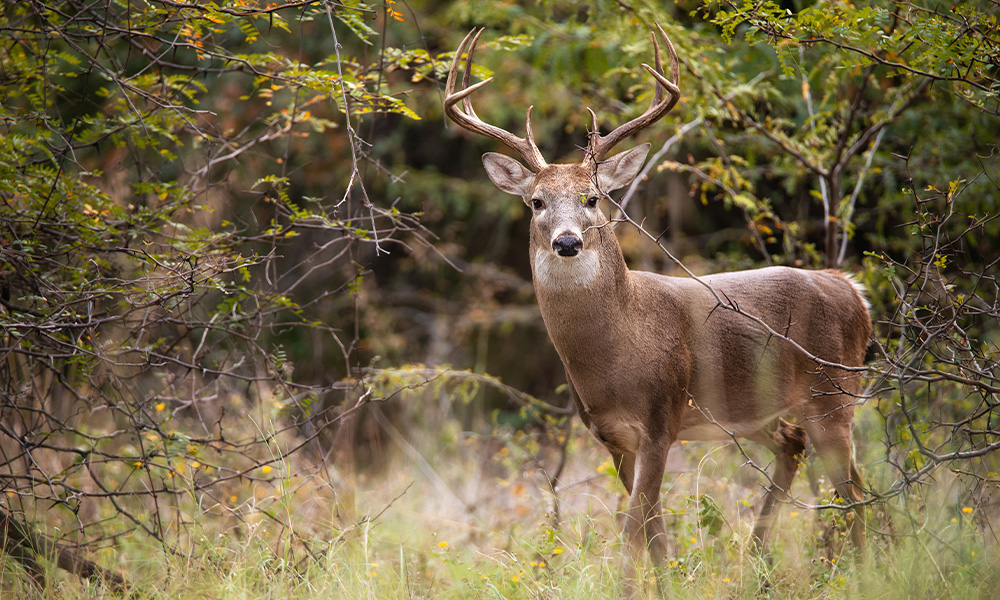
Elk Island National Park is a familiar spot for many Edmontonians – but did you know it’s the only fully enclosed national park in Canada? Ayden Hogeveen joined a project with eight other students, sponsored by the Friends of Elk Island Society, to look at how those fences affect white-tailed deer behaviour.
Habitat permeability – how easily animals and plants move through natural or human-altered environments – is important for ecosystem health.
“Maintaining a healthy ecosystem requires connection to allow movement and keep intact habitat usable,” says Hogeveen, a Bachelor of Science student with a double major in biology and computer science. “The presence of many large grazing mammals can limit vegetation availability, potentially motivating some others – like white-tailed deer – to cross through gaps in the park fence.”
He worked with Dr. Arthur Whiting, associate professor in the Department of Biological Sciences, to monitor animals’ behaviour through camera data. Hogeveen found that fence crossings with certain features, like shrub cover, were used more frequently.
“It was cool to be a part of an ongoing project, making a contribution to future research and hopefully creating a better understanding of the park ecosystem,” he says. “It was a joy to do research with a field component – visiting the park was a great experience.”
Can dogs calm themselves after high-energy greetings?
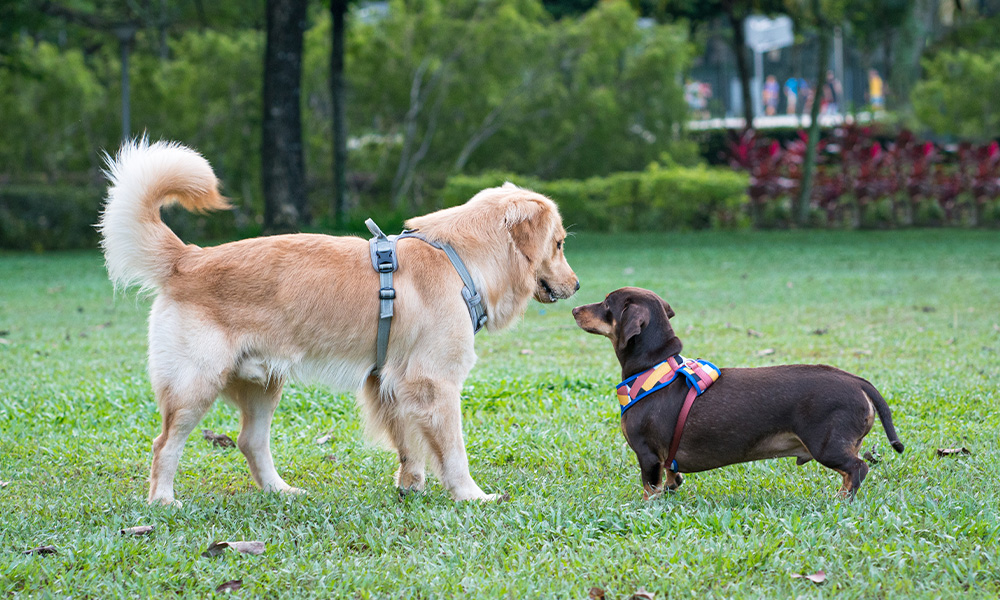
We’ve all seen dogs greet each other at off-leash dog parks – often eagerly and sometimes with high energy that some pet owners may try to discourage. Honours psychology student Travis Hutchinson worked with Dr. Lynne Honey, professor of psychology, to discover whether dogs can calm themselves when greeting other dogs and if shaking their bodies after a greeting is a sign of stress.
Hutchinson observed canine interactions at Edmonton dog parks, focusing on dogs allowed to interact freely without intervention from their owners.
“We saw that most dogs in our sample had good greetings and can walk away seeming calm, even if they were a bit nervous or defensive going into the greeting,” he says. “We also found that shaking their bodies did not seem to indicate stressful events.”
Hutchinson adds that knowing most dogs can calm themselves and de-escalate stressful situations could help dog owners to feel more comfortable in off-leash dog parks.
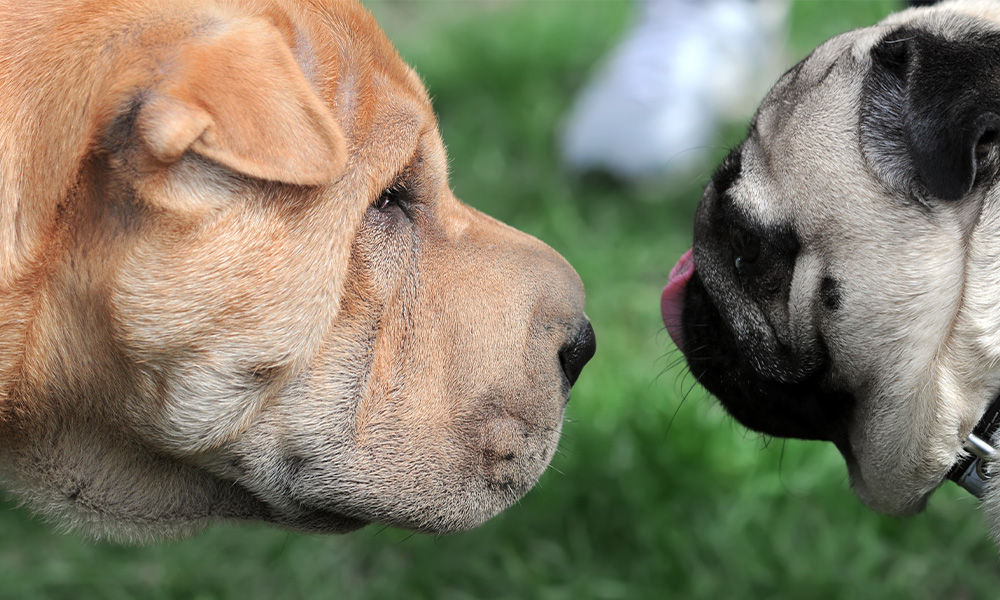
Do dogs judge each other based on appearance?
While helping Travis Hutchinson gather data in dog parks for his research project (read more on that above), Bachelor of Arts student Emily McDermott started to wonder about other factors that might affect how dogs greet one another. She decided to look at whether or not greetings were affected if a dog’s appearance had been modified – like those with docked ears or tails, or those who had been bred to have flat faces.
McDermott, who will graduate this fall with a double major in psychology and sociology, observed interactions between dogs, noting whether greetings were tense and if they were followed by playful or aggressive behaviour.
“Dogs with modified features did not seem to elicit or experience significant negative interactions during or immediately after the greeting,” says McDermott. “This is great news as it suggests that modified dogs can go to dog parks without worrying about distress for themselves or other dogs.”
She adds that her experience working with Dr. Lynne Honey helped her understand the research process and that different approaches and results are all valuable in exploring a topic.
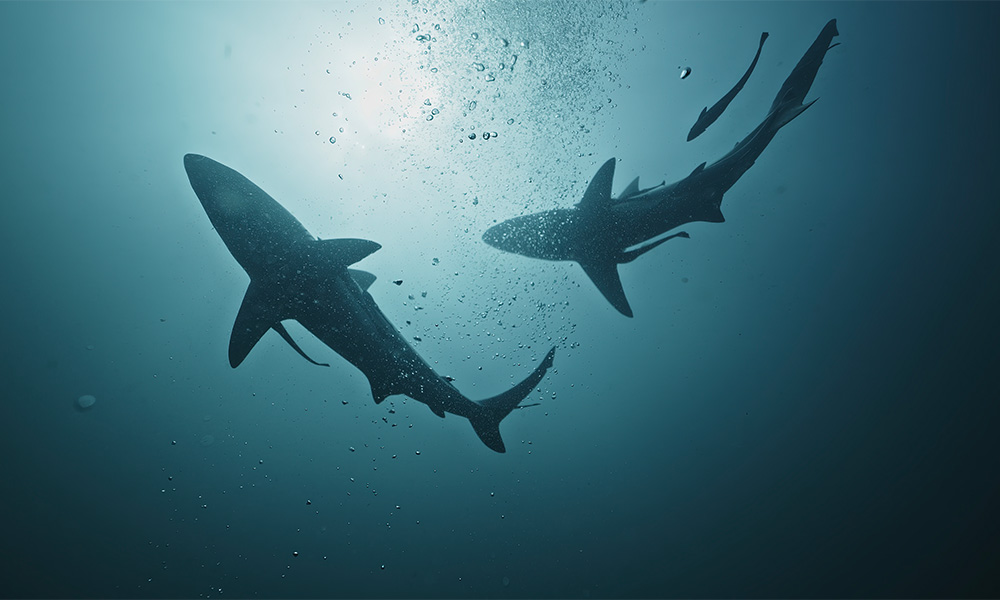
Do attitudes about sharks affect knowledge about conservation?
When Bachelor of Science student Owen Paltzat looked at issues around shark conservation, he noted a lack of awareness of the aquatic animal’s behaviours often led to negative associations.
Working with Mathieu Chalifour, assistant professor in the Department of Mathematics and Statistics, Paltzat surveyed MacEwan students. He asked for the first five words that came to mind when they thought about sharks, as well as some questions about shark conservation and awareness. In analyzing the data, he found correlations between the positive or negative words used in the students’ initial answers and their responses around education and conservation.
Paltzat also found that students who owned pets were more likely to have a positive opinion of sharks, and people who like sharks were more likely to blame developed countries for declining shark populations.
The experience led to more than just a Student Research Day presentation. Paltzat also presented his findings at the Alberta Math Dialogue and had them published in MUSe, the MacEwan University Student eJournal.