Paying for groceries with a tap of your phone is a level of financial technology we expect at our fingertips. But when, exactly, does adopting the next newest tech pay off for a company?
Dr. Ting Cao’s research asks this question, digging into businesses she calls “first movers” to determine the advantages, if any, of early adoption of technologies like AI, digital platforms and online financial services – and whether it actually helps companies, like banks, perform and serve their customers better.
“I'm driven and inspired by real-world business problems,” the assistant professor in the Department of Decision Sciences told host Rea Pallay in a recent episode of the Office of Research Services’ Research Recast(ed) podcast.
Deciding whether to be the first company to adopt new tech, the second, or one of many that follow is important, says Dr. Cao. In some cases, being first can include advantages such as customers, profit and control of the market.
“But if being first means you spend too much money and you do not get the expected return, you’ve lost a lot,” she says. Early adoption might mean making mistakes. And a loss might even help someone else profit.
Her research looks at not only the conditions that make digital transformations successful, but also the less obvious consequences: increased costs, new risks, privacy concerns and changes in how organizations and customers interact. These are all part of the big picture that asks how organizations can create value from emerging technologies while managing the strategic, organizational and human challenges that come with them.
And her research efforts are supported by student research assistants who participate in everything from literature reviews and data collection to data preparation and conference presentations.
“Research assistants are very important,” she says. “Working on projects gives them hands-on experience with the research process while allowing them to apply what they learn in the classroom to real-world questions.”
One of those tough real-world questions? Is the new technology even worth it?
“Digital transformation is driven by fast advancements of technologies, and we do see the technologies shaping how we actually live our lives today and how organizations operate,” she says. “It could be that there's a gap between what we expect the technologies could bring to us versus what they really do bring to us.”
Watch the full episode
Learn more about Dr. Cao’s work, including her SSHRC-funded research about privacy and customer data.

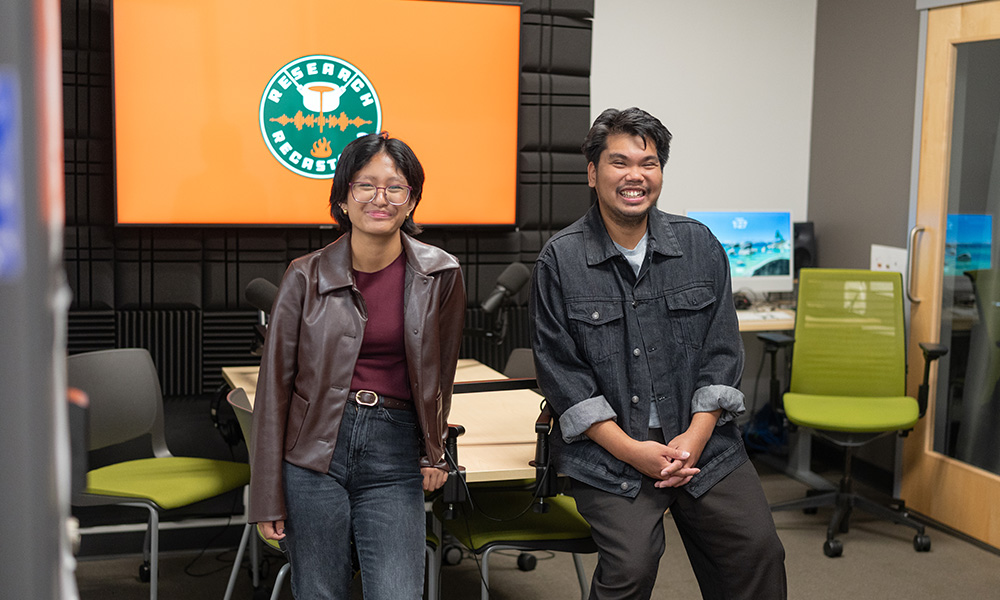
Rea Francesca Amano Pallay is a Filipino student in the Bachelor of Communication Studies program, majoring in journalism, and the on-air host of Research Recast(ed). She has professional experience in journalism, digital marketing and event promotion and hopes to continue using her experience to connect and build community.
John Jonson is the video editor and producer for Research Recast(ed). He’s a Filipino Canadian Bachelor of Communication Studies student majoring in journalism and minoring in graphic design. His creative passions centre on life, photography and videography. He also loves travelling, working on his car, cooking, watching films and collecting specific Pokémon.