While diabetes is a well-known health issue, most people are only aware of the two most common types. Dr. Habib Rezanejad is studying the pancreas and a third type – Type 3C diabetes – which is often misdiagnosed as Type 2.
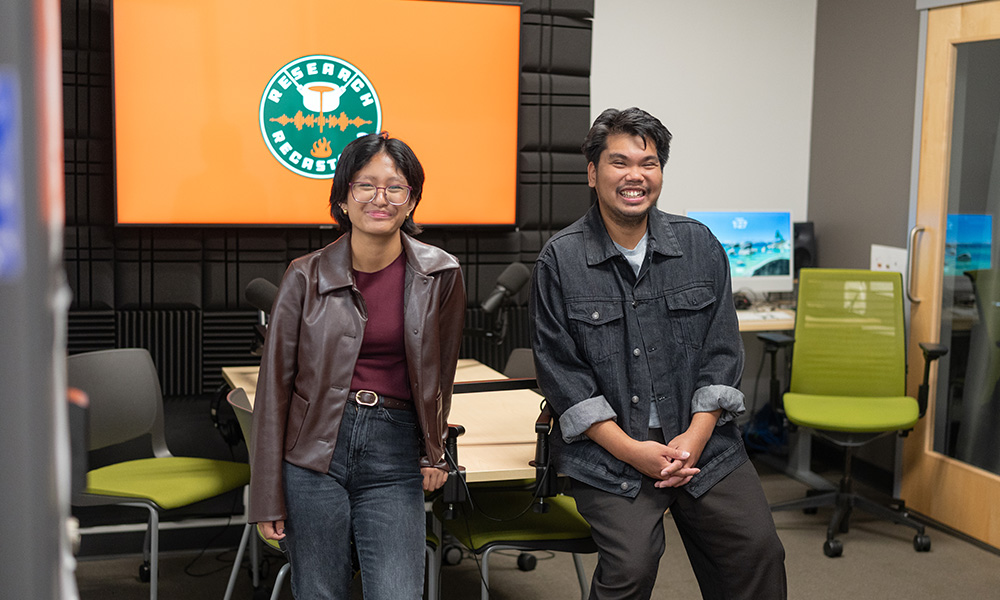
“Type 3C diabetes happens when there is damage to the exocrine part of the pancreas. This damage could be, for example, due to inflammation or surgery,” the assistant professor in the Department of Biological Sciences explained to host Rea Pallay on a recent episode of the Office of Research Services’ Research Recast(ed) podcast. “Damage to one part eventually can lead to damage to the insulin-producing beta cells. And that can cause diabetes.”
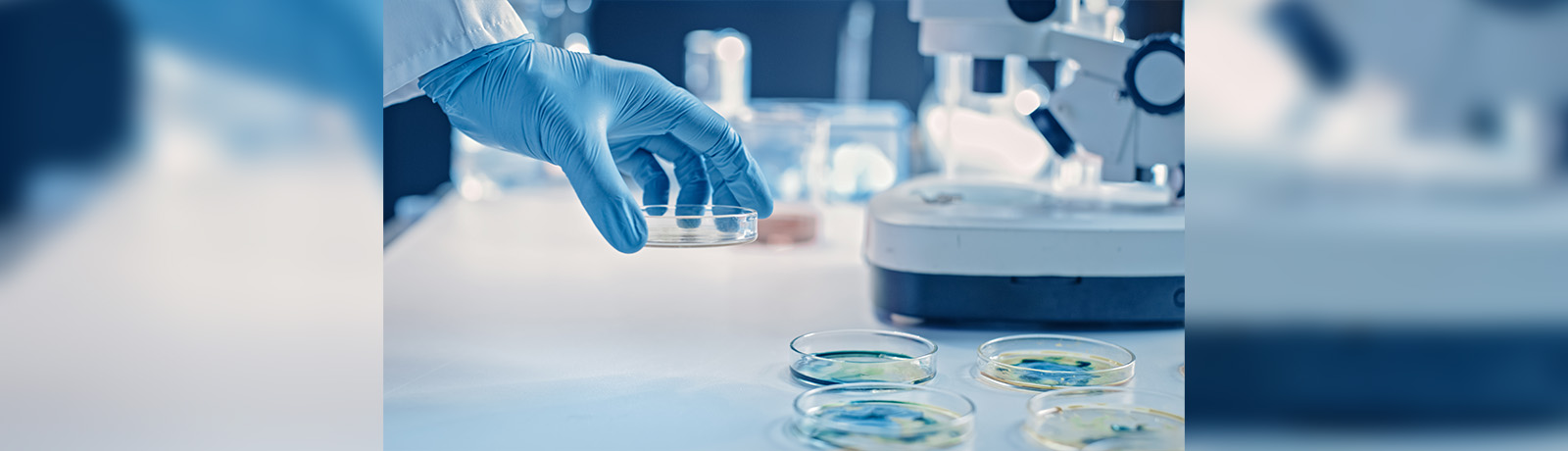
Analyzing pancreatic cell damage has its challenges, though. Typically, research uses either 2D cell culture systems or animal models. But using animals is ethically complicated – and results might differ from those in human trials. Dr. Rezanejad started growing organoids from pancreas cells – provided by the Alberta Diabetes Institute IsletCore at the University of Alberta – to produce more human-relevant study models.
“Organoids are, in simple terms, a simplified miniature three-dimensional model of a human pancreas, in this case,” says Dr. Rezanejad. He grows those tissue samples with the help of undergrad students, who are also co-authors on a paper that details the processes involved. He adds that organoids can produce more accurate results and findings due to their closer relation to full human organs.
From there, Dr. Rezanejad can expose those pancreatic cells to various types of injury like inflammation to better understand the causes of Type 3C diabetes. He’s also able to explore the ways the pancreas senses injury and responds to it test how cells react to different treatment types, and how different cell types in the pancreas communicate with and affect each other.
“I hope that in the future my research can help to better manage, or at least provide early diagnosis of this type of diabetes, and hopefully that can contribute to better treatments,” he says.
Watch the full episode
Learn more about Dr. Rezanejad’s research – including his work with ductal cells, which he hopes might be useful in regenerating functional insulin production in injured pancreases.

Rea Francesca Amano Pallay is a Filipino student in the Bachelor of Communication Studies program, majoring in journalism, and the on-air host of Research Recast(ed). She has professional experience in journalism, digital marketing and event promotion, and hopes to continue using her experience to connect and build community.
John Jonson is the video editor and producer for Research Recast(ed). He’s a Filipino Canadian Bachelor of Communication Studies student majoring in journalism and minoring in graphic design. His creative passions centre on life, photography and videography. He also loves travelling, working on his car, cooking, watching films and collecting specific Pokémon.