What will the world of work look like when I finish my degree? What jobs will be out there? Will there be one for me?
We asked two MacEwan profs from five different disciplines (some who have witnessed multiple waves of disruption and others who were students themselves not that long ago) to share how they’ve seen their fields change, their predictions for the future and how they’re preparing their students for the challenges – and opportunities – ahead.
Jump to a section:
- Science: Ecology, agriculture and the science of what sustains us
- Design: Solving wicked problems across every field and sector
- Business: Global systems in motion
- Early childhood: Expanding beyond care
- Nursing: The bedside and beyond
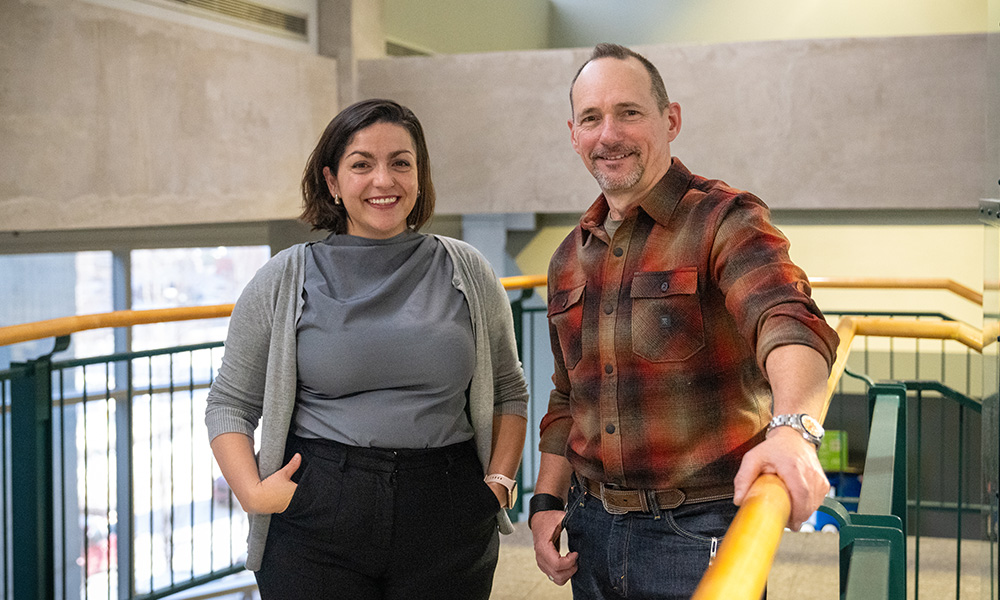
Environmental biologist Dr. David Locky and plant pathologist Dr. Andrea Botero-Ramirez study living things – many of which are struggling to adapt. Climate change, soil degradation, microplastics, invasive species and crop pathogens are just a few of the issues the plants, animals, ecosystems, and, ultimately, people at the centre of their studies face.
“We’re living in an ever-changing world with new problems, old problems that are reemerging and future problems we don’t even know about yet,” says Dr. Botero-Ramirez, a plant pathologist.
The solutions to those problems, the two faculty members agree, can often be found in the biological sciences – and that means opportunity. Agriculture desperately needs new blood, says Dr. Botero-Ramirez, and ecology is more relevant than ever, adds Dr. Locky. The key for students is the ability to adapt, not unlike the plants, animals and ecosystems they study.
Predicting the future: From collectors to interpreters
Both profs say that taking advantage of new opportunities means embracing tech that is finding its way into every corner of the field – from AI and molecular diagnostics to environmental DNA (eDNA), spatial mapping and predictive analytics.
“AI is here to stay,” says Dr. Locky. It’s why the associate professor fully embraces it in his teaching with projects that include AI-driven research on massive datasets from the Alberta Biodiversity Monitoring Institute. “We can do an analysis literally in seconds that would have taken us hours before. With some of the drudgery gone, students can apply themself more fully to answering ecological questions.”
From Dr. Botero-Ramirez’s perspective, AI offers precise data collection that will transform the way agriculture works. “In agriculture, we want uniformity, but nothing is completely uniform in biological systems. With AI, we can get precise information and manipulate systems in ways that will help us move from being reactive to a more preventative approach that will fix many of the big issues we face. It makes me hopeful.”
And while the machines generate the data, says Dr. Locky, judgement, interpretation, ethics and contextual understanding remain human responsibilities. “The tools and technology are going to continue expanding, but there are some things that will never change, including the need for people out in the field.”
What it means for students: Opportunity
That’s why it’s still essential for students to understand what goes into fieldwork, to be well-rounded and to continue building real-world skills, says Dr. Locky. “I see in the many grads who have gone on to do interesting, rewarding work in ecology, and lab experience and professional designations are what allow them to step directly into the roles employers want them to fill.”
And while saving species and spaces through conservation biology is incredibly important, says Dr. Botero-Ramirez, so is having people to produce the food we need.
“If there aren’t enough people in agriculture, who is going to feed us?” she asks. “I tell my students that, in agriculture, there is so much opportunity that they will have a job 100 per cent of the time. We need new blood and fresh ideas in this field. If we don’t get it, we’re going to have doctors and lawyers and bankers and no one to produce their food.”
How they got here
 |
In high school, Dr. David Locky had two loves: muscle cars and the environment. A career in automotive technology took an early lead, but a fish and wildlife program eventually won out. He was a fisheries research tech in Ontario when the economy tanked, and he found himself working in factories and even as a travelling salesman. When university made its way onto his radar, he applied to the University of Waterloo as a mature student, and three degrees followed. |
 |
Dr. Andrea Botero-Ramirez originally planned to study engineering back home in Colombia, but a full-ride scholarship took her into a totally different field – agriculture. Because her early research was applied and focused on economics – studying a pathogen that damages cruciferous vegetables like broccoli and cauliflower, along with canola (which brought her to Canada) – she isn’t interested in just fixing a problem; she wants to find solutions that work for farmers. |
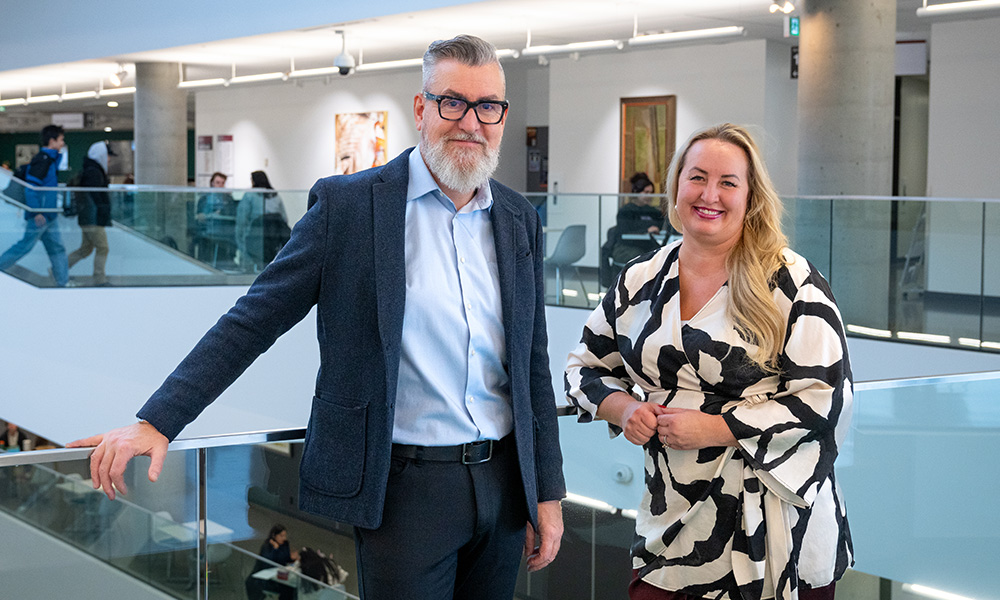
“We used to have these big paradigm shifts and were so aware of the changes when they happened – the Internet, digital cameras, Google – but now change is happening so fast that it’s more of a constant wave,” says Wayne Williams.
As designers saw technology expand and production timelines shrink, something critical was happening behind the scenes: design was transforming into a powerful interdisciplinary tool.
In addition to creating esthetically pleasing deliverables, says Jennifer Danko, today’s designers are facilitators, researchers and sense-makers.
“I’ve never been more optimistic,” says Danko. “The culture of design has evolved to expand from craft toward a focus on systems and structures – and making change within them. There’s more opportunity now than ever.”
Predicting the future: From craft to complexity
Designers in the 21st century, explains Williams, are solving what are often referred to as “wicked problems” – complex issues that cannot be easily conceptualized – across every field and sector, from government and private businesses to health care and everything in between.
“Every industry needs designers to help them visualize the way they interact with their clients and internal services,” says Danko, who works closely with cardiologists to help communicate complex issues and instructions, create human-centred processes and improve patient understanding.
“Designers are translators and interpreters who can help see the way through any kind of problem,” says Williams. “Yes, we can make a website or a poster, but it’s much more than that. We begin with understanding the problem our clients are trying to solve – in many cases helping them define or clarify the problem through research – along with who they are speaking to and how we can help.”
What it means for students: Making friends with uncertainty
What will designers of the future look like? Someone who is curious, loves problem-solving and wants to create change (whatever that might be), says Williams. “Design is as dynamic as you want it to be.”
But while design thrives on uncertainty and iteration, adapting to that way of thinking can be challenging for many students who are hardwired to crave clarity.
“Embracing ambiguity is hard, so we focus on teaching adaptability – normalizing failing, critique and revision so that students learn how to fail productively, sit in ambiguity, argue for decisions and critique AI outputs rather than accept them,” explains Williams.
Doing that, he adds, opens up a world of possibilities. “As long as humans exist, we’ll have human problems to solve. We are seeing designers invited into discussions earlier and organizations bringing in people trained in design thinking. I can only see more and more demand for creative problem solvers, design researchers and design anthropologists.”
How they got here
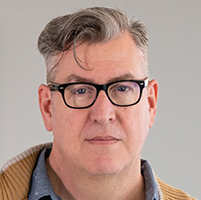 |
Wayne Williams was set to study fine art and incorporating photography into his painting, when he signed up for a visual communication design course – mostly to get access to a darkroom. When his prof gave an impromptu lecture about the transformative power of design and how it could be a force for good and positive change, Williams made the switch and hasn’t looked back. |
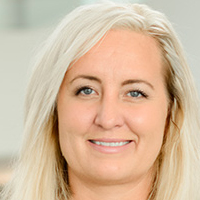 |
After graduating high school at 15, Jennifer Danko was taking courses toward a psychology degree when she changed gears and decided to pursue art. After two years of art school, one of them majoring in glass blowing, she spent years working in marketing – specializing in branding and advertising and running a design studio – before directing her career toward design research and teaching. |
Supply chain thinking has been around since the late 1990s, but it was the COVID-19 pandemic and images of barren grocery store shelves, including a serious lack of toilet paper, that pushed supply chains into the headlines.
“We often talk about black swan events in supply chain management – COVID-19, 9-11 – rare, unpredictable shocks with massive impact,” explains Dr. Joong Son. “But moving forward, it may be more accurate to treat black swan thinking as the new normal. Whether driven by technological shifts, tariffs or geopolitical conflicts, disruption is no longer exceptional – it is constant, and it shapes our supply chains and our daily lives.”
Predicting the future: Data and what to do with it
Historically, supply chains were designed with cost minimization as the primary objective. Today, that emphasis has evolved, says Dr. Son, to be less about the bottom line and more about adaptability and agility. “Companies now understand the need to develop robust and resilient systems, and they are achieving this through the strategic use of technology.”
That’s why big firms like SAP and other enterprise resource planning companies are integrating large language models and AI tools into their suites, allowing them to input parameters and assess different tools, says Dr. Arka Mukherjee. “These huge investments in AI, including agentic AI – autonomous AI systems that work on our behalf – will mean increasingly more human/AI or human/machine interaction.”
Smaller companies, however, might find themselves swimming in so much data that they don’t know what to do with it all.
“Community partners in our classes, for example, want insights, but having more data doesn’t always mean better decisions,” explains Dr. Mukherjee. “We need to be careful about the types of data we feed into these systems, or else we end up in a situation of ‘garbage in, garbage out.’”
What it means for students: Big thinking
One thing that isn’t about to change is the interdisciplinary nature of supply chain management, says Dr. Mukherjee. “Marketing, finance and every other aspect of a business are tied to supply chains. If a company boosts its marketing efforts, for example, its demand increases, and that impacts its suppliers. It’s all connected.”
And the interconnectedness extends beyond organizations, explains Dr. Son. Finance, analytics, geopolitics and technology all converge within supply chain management, implying that students must adopt a global and integrative perspective.
“Mastering your field won’t be enough,” says Dr. Son. “Supply chains are deeply interconnected, spanning technologies, industries and borders. Students need to develop strong insight and critical thinking skills.”
Faculty are preparing students to do that with projects, courses and pathways that help them understand business informatics and analytics, so they have the tools to adapt.
“Students should strive to understand where the future is heading,” says Dr. Son. “And that future is inseparable from AI-driven technologies. While new career opportunities may emerge as a result, many will take titles or forms not yet seen.”
How they got here
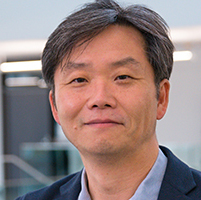 |
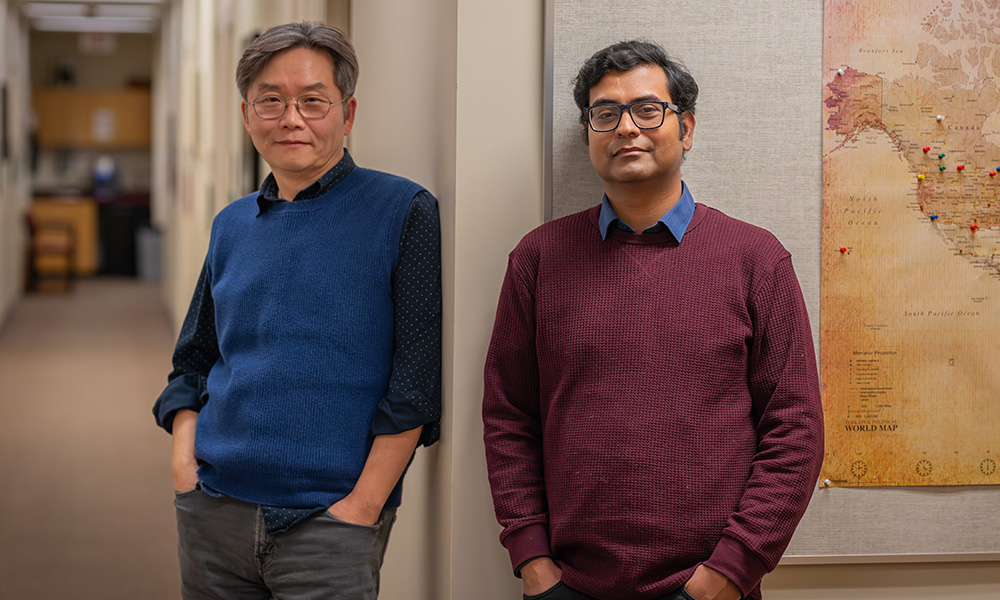
Dr. Joong Son earned a master’s degree in information systems in the U.S. before completing mandatory military service in Korea as a Navy logistics officer. Managing inbound and outbound shipments of food, supplies and equipment reshaped his perspective on business and led him to pursue a PhD in supply chain management. He taught at business schools in the U.S. before joining MacEwan University. |
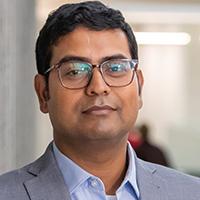 |
Originally from India, Dr. Arka Mukherjee studied mathematics before working as a consultant in the IT industry for several large-scale companies, including SAP, IBM and Infosys. As he learned about business intelligence, customer and supply relationship management, risk and compliance, he realized the importance of integration and decided to pursue a PhD in decision sciences. |
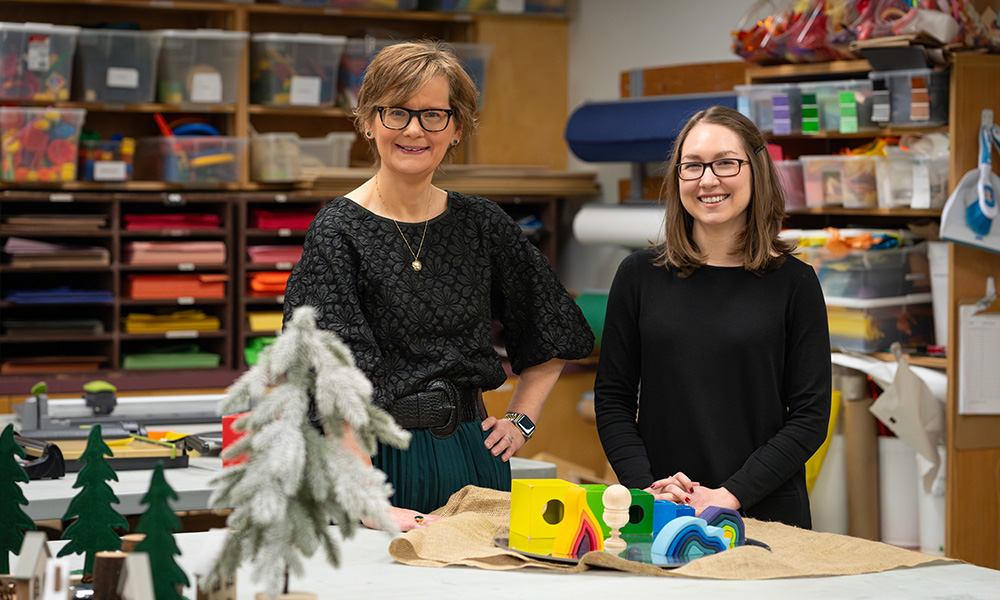
Dr. Nancy Thomas and Dr. Mackenzie Martin say that early childhood educators have the most creative, curious and joy-filled “co-workers.”
“In almost every room you enter, the coolest person will be under the age of six,” says Dr. Thomas. “Early learning is about walking alongside children in those early years and being part of their stories.”
If any program at MacEwan can speak directly to preparing students for jobs that don’t exist, it’s the Bachelor of Early Learning and Curriculum Studies. The field has been experiencing its own kind of “renaissance” over the past 15 years, with MacEwan faculty, students and alumni right at the centre of it all – building the province’s early learning and care framework, known as Flight, alongside practitioners working to professionalize the practice and introducing Canada’s first (and only) early learning curriculum studies degree.
Today, BECCS grads are filling brand-new roles as curriculum collaborators and coordinators, pedagogical mentors and policy contributors. So, what’s next?
Predicting the future: Embracing research and tech
“Our grads are taking up space that didn’t exist before 2020, and the discipline continues to evolve,” says Thomas. But shaking the stigma of being primarily a service, rather than a professional field that uses evidence and pedagogy, isn’t without its challenges.
“We need to continue shaping pathways to leadership roles and creating more opportunities for educators, researchers and families to come together,” says Dr. Thomas. “Early learning is research-informed work that requires hundreds of curriculum decisions – recent research in Australia found that educators in child care settings make over 800 in a six-hour period.”
Capturing the moments that result from those decisions, sharing them and finding space to highlight them at interdisciplinary tables where policy conversations take place will be critical, says Dr. Martin.
“High-quality early learning is not accidental – it involves art, science, emotional intelligence, relationships and professional knowledge. We need to find ways to share the incredible value of the work early childhood educators do in creating high-quality early learning environments for young children, such as with families and policymakers.”
What it means for students: Paving your own path
Students need to be ready to actively shape their learning alongside their professors as they prepare themselves to make those hundreds upon hundreds of pedagogical decisions every day and to take an active role in shaping their own futures when they head out into the field.
Choosing early learning is both a career choice and a commitment to redefining societal understanding of childhood, and the role early learning professionals play within it, says Dr. Thomas. “Our Bachelor of Early Childhood Curriculum Studies (BECCS) graduates are helping define the profession and the roles they’ll have in the future.”
But no matter how much progress is made, she adds, some things never change.
“Some things are exactly the same as they were 35 years ago when I first entered this field as a MacEwan student, including my beliefs around children, families, play, learning and engagement.”
How they got here
 |
When elementary education didn’t quite feel right, Dr. Nancy Thomas switched to MacEwan’s then-diploma program in early learning. She says her whole life began during that first class. After working with children and families for 10 years, she returned to MacEwan as a professor, earned a doctoral degree and was part of the team that created Flight, Alberta’s early learning curriculum framework. |
 |
Dr. Mackenzie Martin was always interested in working with children and supporting families, and spent her teen years in Edmonton volunteering with community organizations, such as the Terra Centre. After earning two degrees – in education and human ecology – in just five years, she headed to the University of Oxford with a Rhodes Scholarship in hand. Her master’s and doctoral research in evidence-based social intervention and policy evaluation had her working with families and community partners around the world – from Moldova, Romania and Macedonia to Thailand. |
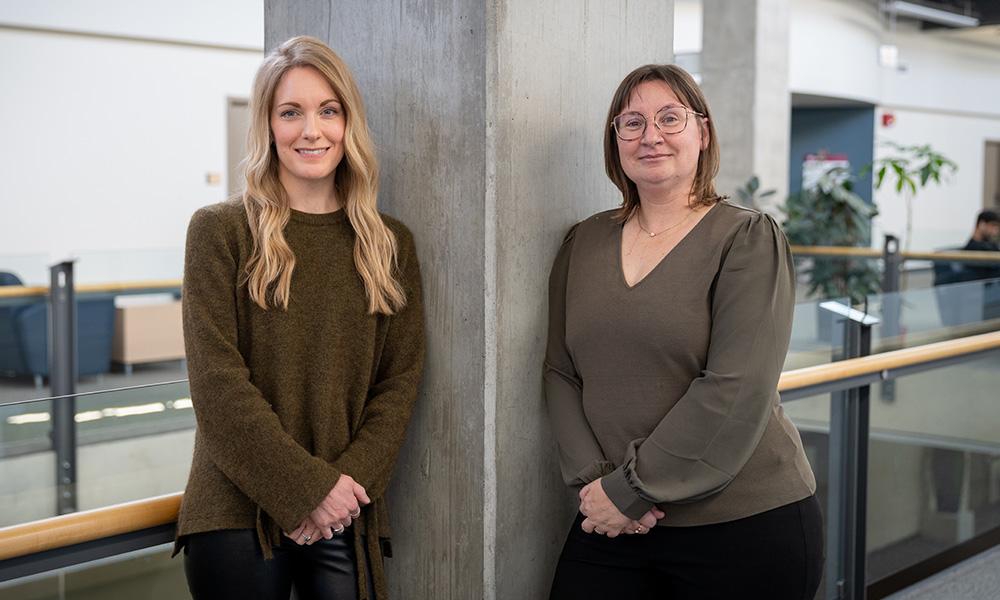
There has been an incredible change in nursing during the first few decades of the 21st century, driven by sometimes positive and sometimes negative realities – including the COVID-19 pandemic, an aging population and advancing technology.
Navigating complexity, says Lisa McKendrick-Calder, is simply the new normal. “In the past, patients were not necessarily healthier, but their issues, the interventions we were using and the work we were doing as nurses were less complex.”
That complexity, she says, has created challenges and shifted the way nurses practice. What will that mean for the future, what changes are still to come and how are faculty helping to prepare the next generation of nurses?
Predicting the future: Less bedside, more leadership
When nursing students arrive on the first day of class, the way they imagine their future careers doesn’t always reflect current practice, says Kelsey Nelson. “Many students think of themselves at the bedside in a hospital working very closely with patients all the time, but that is where a lot of the scope change has happened in nursing.”
Today, registered nurses (RNs) and registered psychiatric nurses (RPNs) are providing more complex care and helping patients navigate managing their health. That’s not about to change, says Nelson. So, faculty are helping students bring a broader perspective to their practice.
“Our students are well-prepared to bring more holistic thinking about health,” says McKenrick-Calder. “For patients living with chronic illness, for example, 99 per cent of managing their health happens at home. I hope we’ll see nurses in the future being able to use their knowledge about how mental and physical health are connected to help patients navigate systems, overcome barriers and make changes that will help patients reach their health goals.”
Nursing education that prepares students to think holistically also prepares them to work on integrated teams. “I’d like to envision a future where RNs and RPNs have more consultation and collaboration in higher-level decisions, and in taking more leadership positions,” says Nelson.
What it means for students: Aspiring advocacy
Setting yourself up for success is critical, agree Nelson and McKendrick-Calder.
“There is a lot of technology involved in nursing now, whether it’s devices to dispense medication, digital charting or AI-enabled tools, and it’s important to be tech savvy as that continues to evolve,” says McKendrick-Calder.
It’s also important, she adds, that students appreciate the role they have to play as advocates in improving systems and understand the realities of nursing.
“As faculty, we’re working to teach our students about resiliency, self-compassion and ways to mitigate the stressors that come with the job.”
Even with challenges in mind, nursing is a field with incredible opportunities.
“Nursing can be whatever you want it to be,” says Nelson. “There are endless options, from teaching to policy development to direct patient care, and so many different specializations; there are always ways to keep learning. I think that’s one of the biggest appeals to this profession.”
It’s also work where you can make a real difference, adds McKendrick-Calder. “In the end, it’s often not about the big things. Nursing is about connecting, listening and being there for someone.”
How they got here
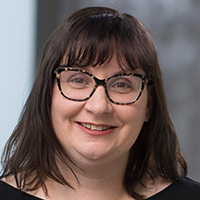 |
Lisa McKendrick-Calder was studying psychology and planning to go into speech therapy when she got a summer job as a health-care aide in a long-term care facility. After an experience working with a patient whom she couldn’t understand, one of the nurses suggested she consider nursing. So she did. |
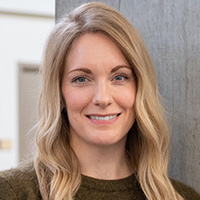 |
Kelsey Nelson wasn’t sure what she wanted to do with her future when her sister suggested scrolling through MacEwan’s website for inspiration. She had never pictured herself in nursing, but the idea of mental health and psychiatric nursing caught her attention. She started with a Psychiatric Nursing diploma and built a career that eventually led her right back to campus. |