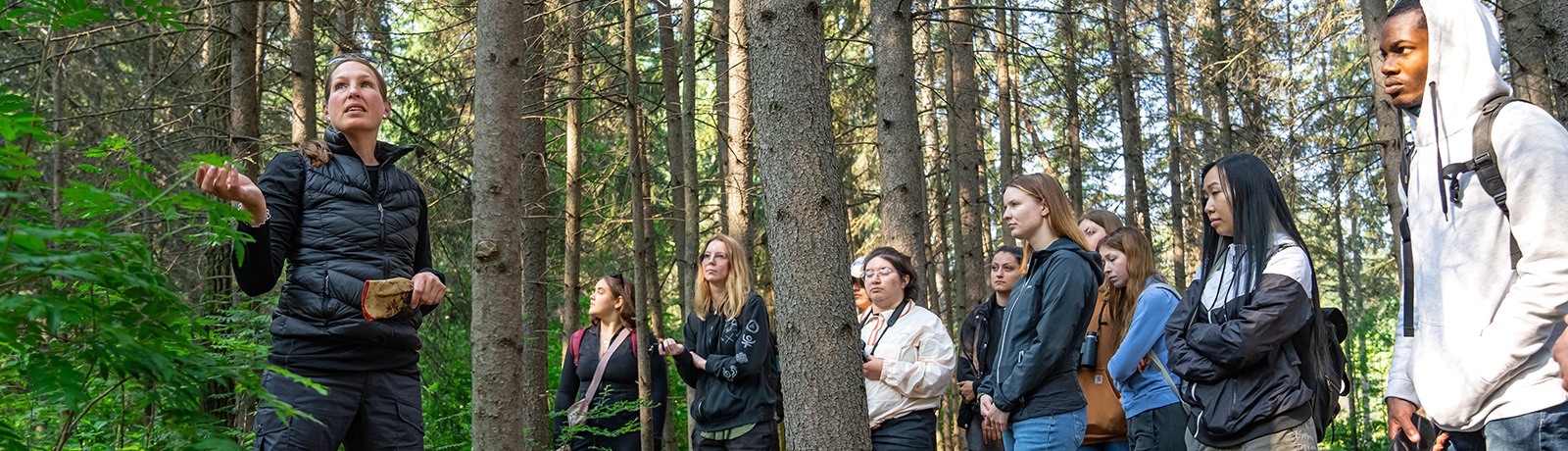
Experiential learning connects what you study in class with real-world, hands-on experience. It’s your chance to apply ideas, test your skills and see how your learning works in practice.
Through these experiences, you build confidence, develop practical skills and make connections that can shape your future career. You graduate not only with knowledge, but also with experience that helps you stand out.
From classroom to career
Your education is more than courses and credits. Experiential learning helps you turn what you study into skills you can use in your career and in your community. You go beyond learning about your field and start stepping into it.
With experiential learning, you can do the following:
- Apply ideas in real-world settings.
- Develop problem-solving, creativity and communication skills.
- Gain practical experience that supports your career path.
- Work with peers, instructors and community partners.
- Reflect on your experiences and connect them to your goals.
- Build confidence by taking on real challenges.
Types of hands-on learning
Learning happens in many places and in many ways—not just in lecture halls or from textbooks. At MacEwan, experiential learning offers many opportunities to apply your knowledge in real-world settings.





When you participate in activities outside the classroom, you develop skills and gain experiences that employers notice. You can add these activities to your Student Experience Record (SER) to capture your unique academic journey.

Your organization can help MacEwan students gain work experience while they contribute to your goals. The Office of Work-Integrated Learning can answer your questions on becoming a community partner.